This eco-tourism company offers authentic experiences like farming, hiking, cooking, and Rastafari traditions—with or without cannabis.
In this article:
🇦🇬 Humble beginnings
🇦🇬 All shades of green tourism
🇦🇬 The experiences
🇦🇬 Details at a glance
🇦🇬 Cannabis in Antigua and Barbuda
🇦🇬 What to know before you go
Antigua doesn’t need to try too hard to show travelers a great time; all it really takes is a sunny day, and the seaside scenery does most of the work. But while you might be tempted to spend your entire trip with your toes in the sand, you’d be missing out on one of the most unusual, authentic, and engaging tourism experiences in the Caribbean.
Humble and Free Wadadli shows travelers the Antigua that exists beyond the beaches. Founded by husband-and-wife team Ras Richie and Kayla Joy, the Rastafari-rooted ecotourism company invites visitors to experience the lush land that they call home. They offer seven distinct experiences focused on local culture, from traditional vegan cooking to live music to immersive history—and cannabis is an optional add-on.
“Cannabis isn’t the focal point of the experiences,” Kayla Joy tells HighWays Travel. “We want to honor it within the guise of it being a sacrament used for the healing of the nation.” In fact, Antigua and Barbuda formally recognizes sacramental cannabis rights for the Rastafari community, making the country a unique place to learn firsthand about the relationship between cannabis, religion, and Caribbean culture.
Humble Beginnings
Before they opened Humble and Free Wadadli, Kayla Joy and Ras Richie were already doing many of these things that they now share with guests. The couple, native to Baltimore and Antigua, respectively, farmed and participated in the Rastafari community. They hiked and explored Antigua’s history. They cared about the environment and were passionate about food security. Eventually, they realized they could show travelers that world, too.
“Our tours have been an avenue to invite people into our lives,” Kayla Joy says. “The business is an extension of who we are and how we feel about our community.”
The company operates on a five-acre farm and offers authentic experiences throughout the surrounding area. Three-quarters of its profits contribute to sustainable farming, and a portion of the proceeds from its deluxe eco-tours supports Rastafari initiatives. “The ability to have impact in a meaningful way is what’s most enjoyable for me,” shares Kayla Joy.
All Shades of Green Tourism
Kayla Joy sees enormous potential in what she calls “green tourism,” which encompasses considerably more than cannabis. It means farming, local food, and sustainability. It means putting tourism dollars into the communities travelers are actually coming to see. “We’ve taken on the mission of trying to do good for the planet with the amount of access that we have,” she says.
That’s particularly relevant in a Caribbean destination where it’s entirely possible to fly in, enter a resort, and spend most of your vacation insulated from everyday life on the island.
On the tour, one guest’s priorities may be very different from the next person’s. “Some folks really don’t care too much about cannabis or Rastafari. They just want to be with goats,” Kayla Joy laughs. Others specifically seek Humble and Free out for cannabis. All types of travelers fit in just fine here; tours are family-friendly, designed so that partakers and non-partakers can experience the culture together.
The Humble and Free Wadadli Experiences
Guests can sign up for seven distinct experiences that showcase Antigua and Rastafari culture. “When people come, they get a new perspective on things, and on life,” Kayla Joy shares. Come for the cannabis if that’s what gets your attention. Just don’t be surprised if that’s not what you remember most.
“How Far Do You Want to Go?”
Some visitors want a relatively straightforward cultural or farm tour. Others want a meal, and still others want cannabis incorporated into the experience. Because each tour is highly customizable, all are possible at Humble and Free Wadadli. The Roots-level experiences provide the basic tour. Deluxe options go deeper and typically incorporate food. Royal experiences add cannabis and traditional ceremony.
History Experiences
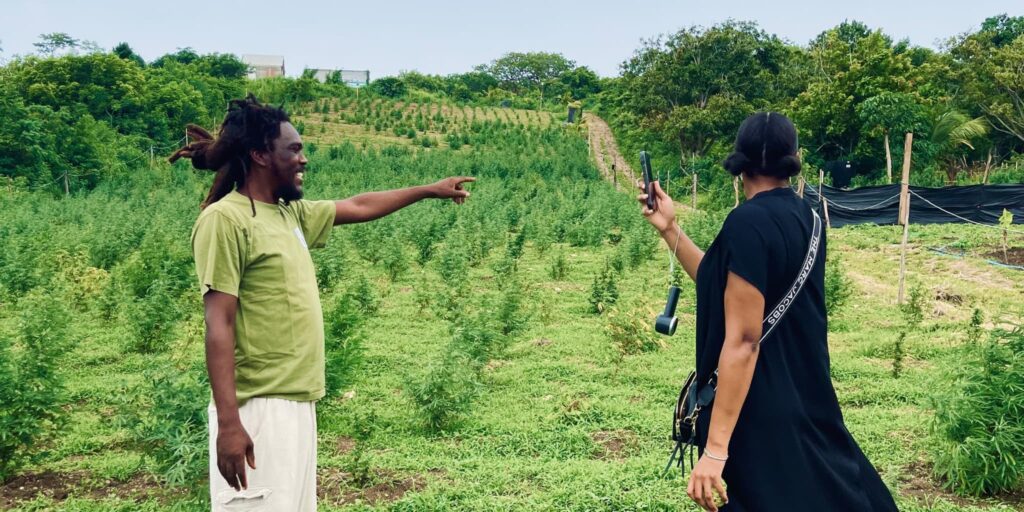
One of the best ways to understand what Humble and Free Wadadli is all about is the Ras Freeman Tour. The experience takes guests into one of the first villages to be freed during slavery. The area, once a plantation, is now a sacred place for worship, farming, and natural living, and on the tour, guests have a chance to engage with the local Rastafari community. This tour includes a visit to the cannabis fields and greenhouse, along with a lesson on medicinal cannabis in Antigua.
The Sankofa Hike takes guests on a four-mile journey up Monks Hill and to the Old Nyabinghi Tabernacle, where Rastafari culture planted its roots even before Ras Freeman was established. The hike not only immerses participants in history, it showcases the spectacular natural beauty and deep culture of Antigua. Travelers stop at an elder’s home, encounter fruit trees, and can share a meal.
On the three-mile Estate to Estate Walking Tour, attendees weave through multiple sugar cane estates. Along the way, the group encounters livestock, enjoys stunning views, and learns about the island’s colonial history.
Food Experiences
Antigua depends heavily on imported food, so local agriculture is an important part of the island’s ability to become more resilient and self-sufficient. The Humble and Free Farm Tour introduces visitors to seasonal crops, fruit trees, sustainable growing practices, and the animals that live on and around the farm.
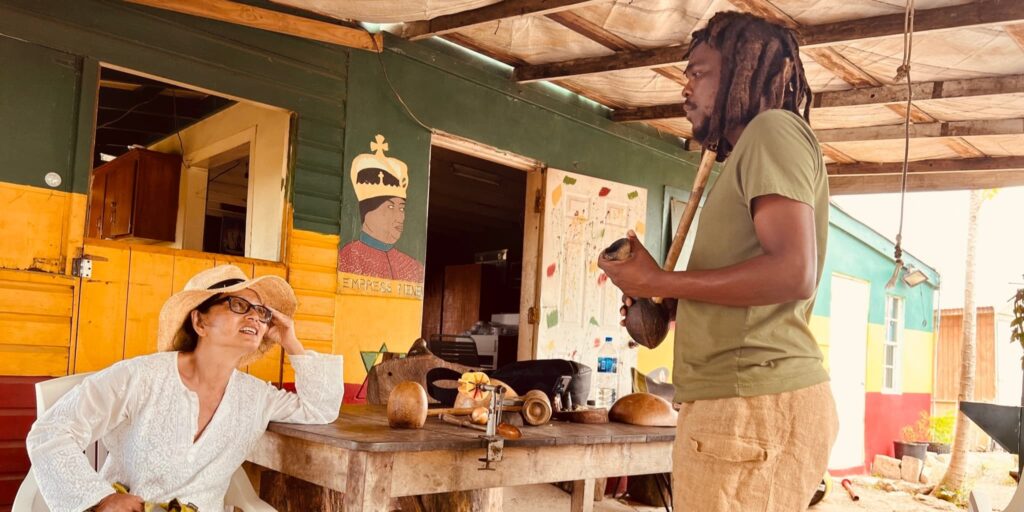
The Jabba Pot Experience offers a hands-on cooking class that introduces visitors to traditional clay-pot cooking and Ital cuisine. Guests spend roughly two hours preparing and eating their food, with local juice and ingredients incorporated into the seasonal dishes.
Guests who sign up for the Agro District Hike get to see local farms, taste local fruit, and explore Coconut Tree Canopy Garden, one of the island’s major coconut-growing areas.
Or Lean in to Cannabis
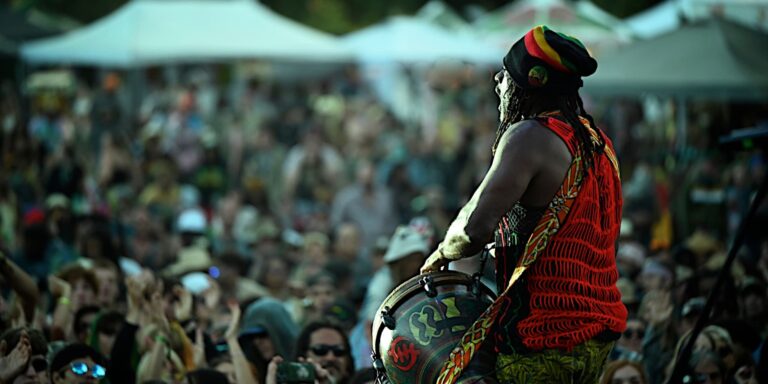
If you want an experience where cannabis takes center stage, choose Mellow Meds, which combines the plant with wellness, food, and music. The tour can include Kemetic yoga and meditation, a pre-roll, edibles, vegan food and snacks, cannabis-infused tea, a chalice corner, and live performances by local musicians.
Details at a Glance
Humble and Free Wadadli
📍 Where: Liberta, Saint Paul’s, Antigua & Barbuda
📞 Contact: (268) 723-1333, humbleandfreewadadli.com
💰 Cost: Prices start at $30-70, depending on the tour.
🚸 Ages: Most tours are open to guests of all ages. Cannabis experiences are only offered to adults.
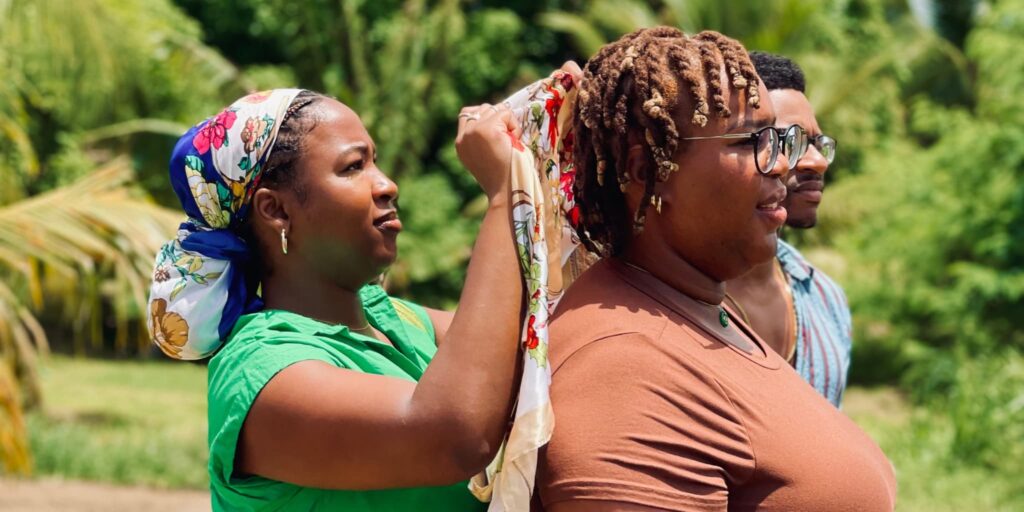
👒 Dress code: Modest dress is required, including a skirt or dress below the knee and a head covering for women.
🌾 Experiences: Rastafari cultural tours, farm tours, hiking, cooking, and more
🌿 Cannabis: Optional on many experiences; more central to Mellow Meds and Royal experiences
♿ Accessibility: Accessibility varies by tour. Contact Humble and Free to discuss specific needs.
🎫 Booking: Book at least 24 hours in advance.
🚕 Transportation: If you don’t have a vehicle, Humble and Free can recommend preferred taxi partners.
Cannabis in Antigua and Barbuda
Cannabis laws in Antigua and Barbuda are particularly interesting for travelers because the country has taken steps toward both decriminalization and recognition of cannabis’s religious importance to the Rastafari community.
Below, take a look at some of the laws you need to know before you go to Antigua and Barbuda. We aim to keep this page as up-to-date as possible, but since laws change often and quickly, we highly recommend checking out the U.S. Department of State’s page about the country before you go.
Cannabis is decriminalized in small amounts.
Adults may possess up to 15 grams of cannabis without facing criminal charges, and households are permitted to grow up to four cannabis plants for personal use. Decriminalization, however, is not the same thing as unrestricted legalization.
Rastafari have additional protections.
Religious rights afforded to Rastafari should not be interpreted as blanket permission for tourists to possess or consume cannabis without restrictions.
There is a regulated medical cannabis system.
Antigua and Barbuda has established a legal medical cannabis framework overseen by the country’s Medicinal Cannabis Authority. Travelers shouldn’t assume, however, that a medical cannabis card or prescription from home automatically gives them the same rights in Antigua.
Be thoughtful about where you consume.
Decriminalization doesn’t mean you can light up anywhere you want. Public consumption can still be restricted, and individual hotels, resorts, beaches, businesses and other properties may have their own policies. Ask before consuming rather than assuming a space is cannabis-friendly.
And don’t bring cannabis with you.
Regardless of the laws at your destination, travelers should never carry cannabis across an international border. That includes traveling from a U.S. state where cannabis is legal. If cannabis is going to be part of your Antigua experience, obtain it legally after you arrive and follow local rules.
Good to Know Before You Go
Antigua and Barbuda: The Basics
Antigua and Barbuda is a small Caribbean nation made up of two main inhabited islands—Antigua and Barbuda—along with several smaller islands.
Most visitors spend the majority of their trip on Antigua, the larger and more developed of the two, while Barbuda offers a quieter experience known for its relatively undeveloped landscapes, wildlife, and pink-sand beaches. If your schedule allows, experiencing both gives you two very different versions of the Caribbean in a single trip.
U.S. citizens traveling to Antigua and Barbuda need a valid passport, and travelers should also be prepared to show proof of onward or return travel. Before arrival, visitors should complete Antigua and Barbuda’s required ArriveAntigua digital entry process, which is designed to streamline immigration and customs.
Quick Facts about Antigua and Barbuda
- Language: English
- Currency: Eastern Caribbean dollars (XCD), although U.S. dollars and credit cards are widely accepted.
- Time zone: Atlantic Standard Time with no daylight savings time
- Driving: Cars drive on the left side of the road.
- Electricity: The standard is 230/240 volts and 50Hz, although some hotels offer 110-volt outlets. Check with your accommodations to see if you should bring an adapter and/or converter.
- Main airport: V.C. Bird International Airport (ANU) on Antigua receives international and regional flights.
- Getting to Barbuda: Barbuda is reached from Antigua by air or sea.
- Safety: As of August 2026, the U.S. State Department lists Antigua and Barbuda at Level 1: Exercise Normal Precautions.
Do you have recommendations for what to see, do, and eat in Antigua and Barbuda? Share your thoughts in the comments below.