A new digital map explores cannabis laws in 173 countries, from possession and medical use to home growing and making edibles.
Planning a 420-friendly getaway? Cannabis laws vary dramatically from country to country, so before you pack your bags, there’s one important detail to figure out: What’s actually allowed at your destination?
In this article:
🗺️ A different kind of cannabis map
🗺️ How the map works
🗺️ Researching 173 countries
🗺️ Why home grow rights matter
🗺️ A resource, not legal advice
When it comes to cannabis legislation, “legal” can mean many, many different things. One country might permit adults to grow cannabis at home but prohibit recreational sales; another might allow medical use but impose strict penalties for possession without a prescription. And just because something was legal during your last visit doesn’t mean it will be for your next one.
That’s where the newly unveiled World Cannabis Map comes in. This comprehensive resource aims to make navigating these differences a whole lot easier.
A Different Kind of Cannabis Map
For anyone curious about the rapidly changing global cannabis landscape, the World Cannabis Map offers an accessible way to explore how different countries approach the plant.
Created by Margaret Thomas, a Certified Ganjier and host of the podcast Bite Me The Show About Edibles, the free resource examines cannabis laws in 173 countries. While its primary focus is on home cultivation and making edibles, the map also provides a useful starting point for travelers researching cannabis laws abroad.
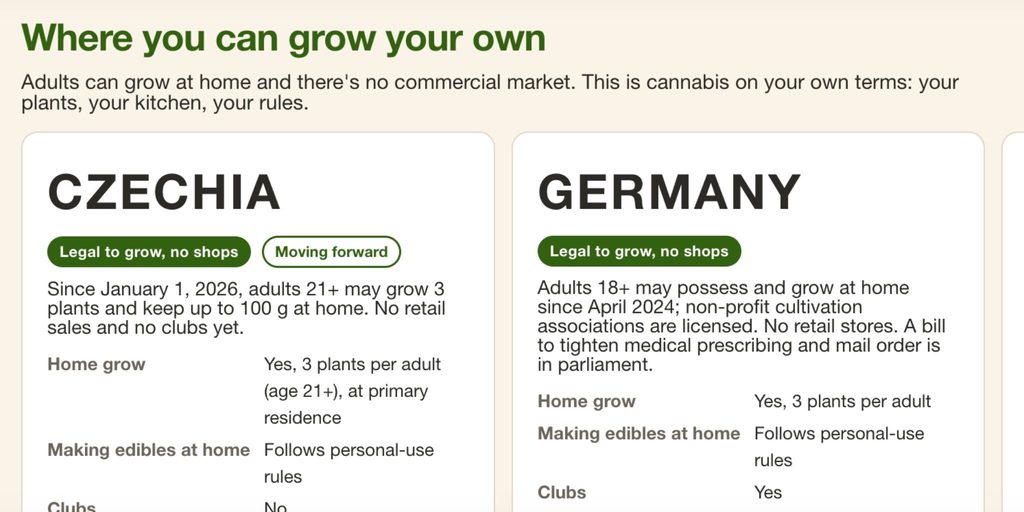
The idea grew out of her work on Bite Me and conversations within her Bite Me Cannabis Club. The varied experiences of the community she created prompted her to look more closely at the vast discrepancies in cannabis regulations around the world. For instance, although Germany legalized personal cannabis possession and home growing in 2024, it doesn’t have the widespread recreational dispensary system found in places like Canada or many U.S. states.
“A lot of maps are designed around where can I buy?” Thomas told HighWays Travel. “That’s great if you’re visiting a place with a legal recreational market, but what about where I can legally grow my own?“
How the Map Works
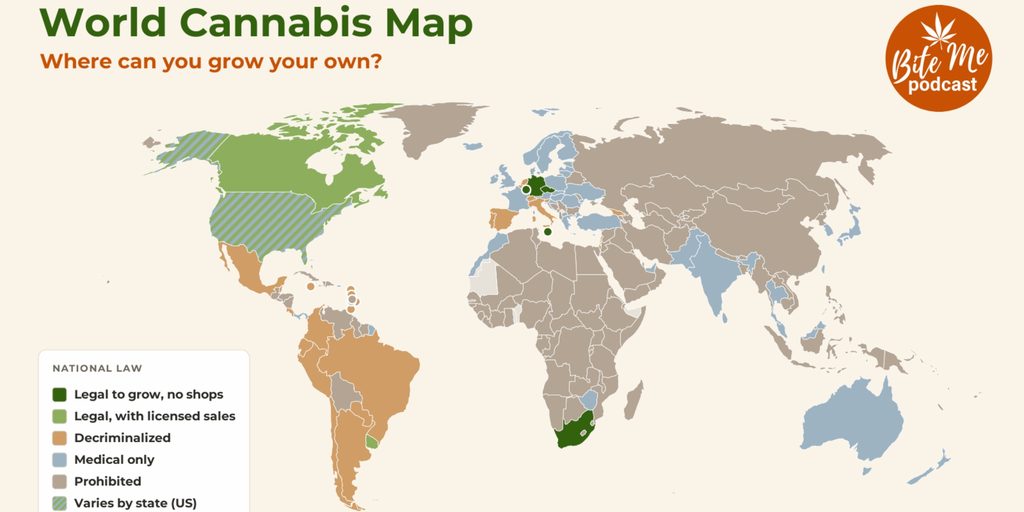
Different jurisdictions across the globe use terms like legal, decriminalized, and tolerated in ways that can be confusing to people unfamiliar with local laws. These important distinctions are reflected in the World Cannabis Map‘s color-coded, interactive layout.
Users can select a country to see a summary of its laws, with details about personal cultivation, making edibles at home, and access to cannabis. In fact, the map identifies several legal categories:
- Legal to grow, no shops: Countries that permit personal cultivation without traditional recreational retail stores.
- Legal with licensed sales: Countries where regulated cannabis retail markets operate.
- Decriminalized: Places where certain cannabis activities may not result in criminal prosecution but aren’t necessarily legal.
- Medical only: Countries that permit some form of medical cannabis access without broadly legalizing recreational use.
- Prohibited: Countries where cannabis remains illegal.
- Varies by state: A separate designation for the United States, where laws differ significantly between states.
- Not reviewed yet: Countries where the legal status hasn’t been sufficiently verified.
The map also specifically identifies countries where cannabis policies are changing, including places that have moved toward more restrictive laws. Thailand, for example, tightened cannabis access rules in 2025 after several years of relatively open retail activity. Japan introduced stricter penalties for cannabis use in December 2024.

Researching 173 Countries
Creating a resource that covers so many different legal systems is a substantial undertaking, especially when those laws are constantly evolving.
“I built this with AI-assisted research with a specific set of standards: Every country needed a current source, and anything I couldn’t confirm stayed grey,” she explained to HighWays Travel. The process revealed how surprisingly difficult it can be to determine what’s legal, even when consulting seemingly authoritative resources.
“Sources contradicted each other,” she shared. “One database listed Palau as fully legal while its own country page said illegal. Manitoba’s government page still said home grow was banned after the law had changed.” New legislation, court decisions, and regulatory changes can quickly make previously accurate information outdated.
The United States presents its own challenge. Instead of attempting to capture every state’s cannabis laws within one national designation, Thomas uses a striped pattern to indicate that laws vary by state; the map then directs readers to the Cannabis Factbook for more detailed information.
Thomas plans to update the World Cannabis Map quarterly, with the next review scheduled for December 2026 to address developments related to pending federal hemp legislation in the United States.
Why Home Grow Rights Matter
For Thomas, the right to grow cannabis at home is an important part of the larger legalization conversation. One of the map’s central features highlights countries where adults can grow their own cannabis without a conventional commercial marketplace. Examples include Germany, Malta, Luxembourg, and Czechia, where personal cultivation is permitted under different rules.
“Home grow rights are important and should be protected. They allow cannabis users to take their medicine into their own hands, having full ownership over it,” she said. By showing how different countries approach personal cultivation and commercial sales, the project invites readers to consider the many ways cannabis legalization can work.
Her long-term goal is for the map to become a reliable, freely available reference for people interested in cannabis laws around the world, particularly personal cultivation rights. “I think it shows that non-commercial grow/make-you-own models exist and work in many places, serving the people that live there,” Thomas said. “This map is for home growers and edibles makers, travellers and people who are thinking about relocating.”
A Resource, Not Legal Advice
While Thomas believes in the project and will update the map regularly, she stresses that it is simply a resource, not the final say on what is and isn’t permitted from place to place. That’s an especially important point for international travelers, who are subject to the laws of the countries they visit regardless of what’s permitted back home.
“It’s not legal advice! Always check the sources before acting, because things can change before an update,” she warned.
Have you checked out the World Cannabis Map yet? Share your thoughts in the comments below.